In this article, Thomas tells you about his journey, from his childhood to today. Discover how he came to create the Tardix model, and what path led him to the person he is today.
The founder of Tardix
Thomas A. Guillet
Summary
My childhood, a rather ordinary starting point

I was born in a small town in southern France, Carpentras. Despite huge curiosity and an interest in science and technology, my schooling was always mediocre. I was never interested in the lessons being taught, always imagining how we could remake the world. Diagnosed with dyslexia and dysorthographia as early as first grade, I always suffered from school methods rather than benefiting from them, which only pushed me to be solitary, to turn inward, and contributed to developing my imagination and reflective spirit.
Obviously, place a different and lonely child in the school system, and you get an obvious result: bullying. Experienced throughout my schooling, it only pushed me further away from the education system. In 2012, at 15, while in tenth grade, I had my first burnout. The combination of academic difficulties, loneliness, and bullying pushed me to the edge and made me sink into a long depression.
First projects
From solitude to building a network
If there's one important thing I learned from previous projects that didn't succeed, it's that I needed to improve my social skills and build a network. The Chapp-e association lasted a little over a year, during which I continued to gain experience as a sysadmin and interacted with many different people. This is the period where I developed my first network and found my first partners.
During this period, I also learned to develop socially through volunteering in an association that helped stray and abandoned cats by finding them new families. I discovered the harm often done to pets, which developed my humanitarian side and sensitized me to the ecological cause. My volunteering in this association lasted 3 years.
It was this volunteering that made me want to do my civic service in a social center. For a year, I helped people of all kinds familiarize themselves with IT. I discovered a passion for helping others.
This associative period showed me that even in this environment, which is supposed to be benevolent, many only serve their own interests and don't hesitate to help themselves to funds intended for associations. I also discovered that too many volunteers only provide service for their own self-satisfaction.
Regigames Studio
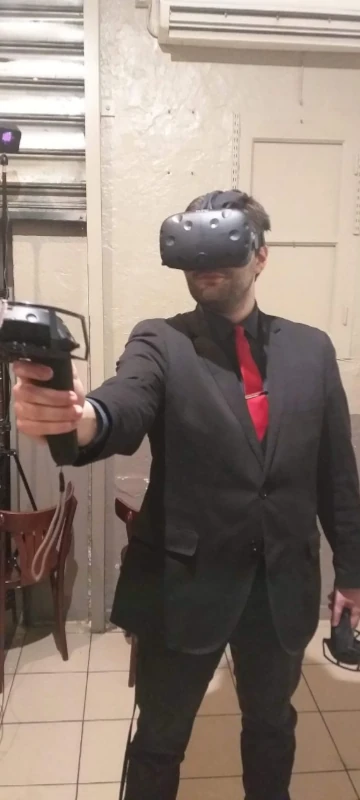
On August 18, 2018, RegiGames Studio was created with my partner Antonin. I started as a treasurer in the project, which was intended to be the successor to Chapp-e. Initially, it was a video game creation studio, to introduce video games to as many people as possible. Three months after the creation of RegiGames Studio, I took over the presidency. I was more proactive and mastered the administrative tasks essential to the association's presidency. After taking the presidency, I added my own ambitions: audiovisual creation.
I found myself with about a hundred volunteers internationally, divided into two teams, North and South. The North team was managed by Antonin, more video-game oriented, while the South team, which I managed, was more audiovisual oriented. I discovered the world of photography and cosplay, and by extension, Asian culture and the manga community.
It was at this point, in 2019, at the association's peak of activity, that I had the opportunity to revive my cybercafé project. The Widget Bar was ready to create a second association with us, which was to work hand-in-hand with RegiGames to hold video game competitions. For a while, the activity worked, but the establishment lost quality. The problems I had noted when wanting to launch the project three years earlier were confirmed: the bar's economy wasn't working. Then we had RegiGames' biggest problem: volunteers left with our game server and tried to erase it completely. I disagreed with Antonin on the team he had chosen, which lacked maturity. The disagreement led to a fight, and he decided to do without my services, leading to my dismissal.
An hour after my dismissal: "Hello? Thomas? How do we close an association?". Antonin, in the confusion of my departure, wanted to close the association. He couldn't figure out how to manage the team, the partners, or the system. I agreed to return, but the damage was already done, and RegiGames began to sink into oblivion. Many volunteers left, and with the arrival of COVID, the association found itself completely empty. Antonin, for his part, had left to pursue his studies, and I didn't want to start over from scratch alone.
Little anecdote: in 2019, during the association's period of trouble, I wanted to create a sole proprietorship to provide IT services, but I canceled its creation to try to maintain RegiGames. Due to administrative delays, the company was created but closed the same day.
A little memory of the company that lasted 1 day.
The project in Russia and the birth of the name Tardix
During lockdown, I took an interest in cryptocurrency. I tried to create an investment fund based on it that would allow me to finance my own projects. I asked for advice from the AMF (Financial Markets Authority), which joyfully told me: "Cryptocurrency is terrorist money, and I'm sending someone to do a tax audit on you right now!" I was very disappointed by the French administration.
Still during lockdown, I started learning new languages. I am a lover of cold countries, and I signed up for an application that allowed me to chat with people internationally. That's how I built a network in Russia.
Thanks to my contacts in Russia, I wanted to create an investment fund to initiate my projects. That's when I decided to name the project Tardix, which is a reference to my favorite series. It's at this point that I began to imagine a modular group, which resulted in the group you know today.
On February 22, 2022, Russia invaded Ukraine, and Europe-Russia relations deteriorated. A few weeks later, all my projects were blocked due to the situation. In agreement with my Russian partners, I decided to leave the project to give them a chance to succeed without me.

Synergia and Wanagain
After abandoning the projects in Russia, I found work as a sysadmin in a clinic, Synergia. That's where I met Patrick Lozano, who is now one of my partners. Synergia was a source of valuable experience; I discovered the state of medical services. The clinic's administration and IT were in a disastrous state.
Directly after Synergia, I worked for WanAgain, a professional connection provider. WanAgain is a company that needs modernizing, but I was never able to initiate that.
Both jobs were beneficial for the design of my projects. They showed me how much many sectors would benefit from improvement and modernization. They strengthened my desire to innovate and create something new.
Tardix

Fueled by all my previous experiences, I was getting closer and closer to the project that exists today. I already had in mind the modular system and the business sectors I wanted to target. In 2024, I launched the creation of the Tardix company in France, with a few partners to accompany me.
At that time, I already had the plan for the first three years of Tardix in mind. Finding a team with enthusiasts and specialists for each business sector during the first year, and then, launching a search for investments.
Credits
Writing
Thomas A. Guillet